
Long Working Hours Do Not Guarantee High Productivity
In many workplaces, productivity is often measured by how busy people appear. Long hours, packed schedules, and constant activity are mistaken for effectiveness.
However, organisations frequently discover that despite intense effort, results remain inconsistent.
The reality is simple: working longer does not automatically mean working better.
What Productivity Really Means in Organisations
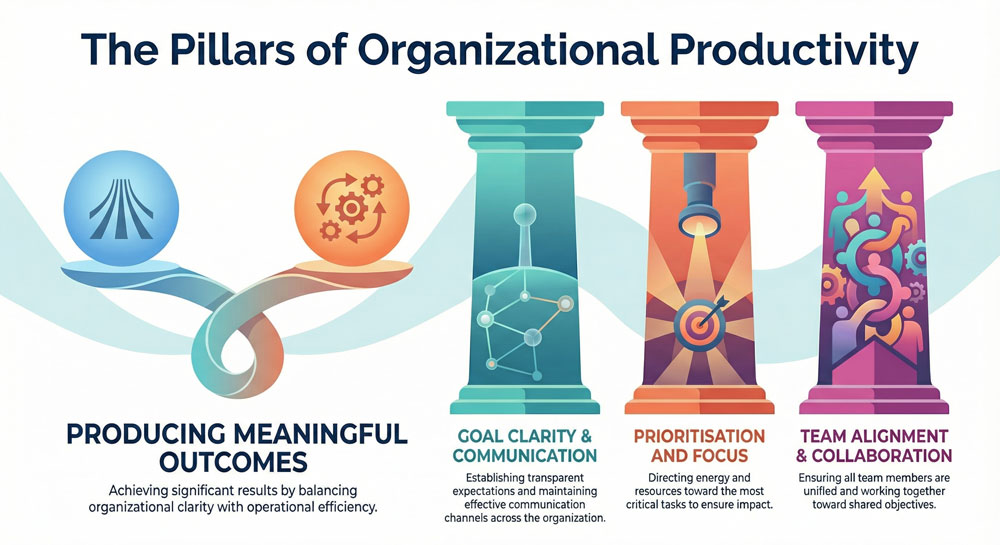
Productivity is the ability to produce meaningful outcomes with clarity and efficiency. It is influenced by:
- Clear goals and expectations
- Effective communication
- Prioritisation and focus
- Team alignment and collaboration
When these elements are missing, effort increases but results do not.
Why Productivity Breaks Down at Work
Productivity often suffers because:
- Roles and priorities are unclear
- Teams are misaligned on objectives
- Communication creates confusion rather than clarity
- People feel overwhelmed or disengaged
These issues are rarely about individual capability. They are usually systemic and cultural.
People Are Central to Sustainable Productivity
Technology and processes can support productivity, but people determine how effectively they are used.
When individuals:
- Understand their purpose
- Feel supported and valued
- Are empowered to make decisions
They work with greater focus and ownership. This leads to higher-quality output, not just faster completion.
Leadership’s Role in Productivity
Leaders influence productivity through how they:
- Set expectations
- Allocate resources
- Communicate priorities
- Manage workload and pressure
Productivity improves when leaders create clarity instead of urgency, and alignment instead of overload.
RWCT’s Perspective on Organisational Productivity
At RWCT, we see productivity as a people-driven outcome. Our programmes help organisations improve productivity by strengthening leadership, communication, and team alignment.
Because sustainable productivity comes from people who work with purpose not pressure.