

Everyone Is Talking,So Why Is Nothing Clear?
In many organisations, communication appears constant. Meetings are frequent, messages are sent, and discussions happen daily. Yet confusion, misalignment, and frustration continue to surface.
This leads to a common complaint:
“We communicate all the time, but things still go wrong.”
The issue is not the absence of communication, it is the quality and clarity of it.
Communication Is Not Just About Information
Many teams equate communication with sharing information. While information is important, communication goes beyond that.
Effective communication ensures:
- Messages are understood, not just delivered
- Expectations are clear, not assumed
- Feedback is constructive, not personal
Why Communication Often Breaks Down at Work
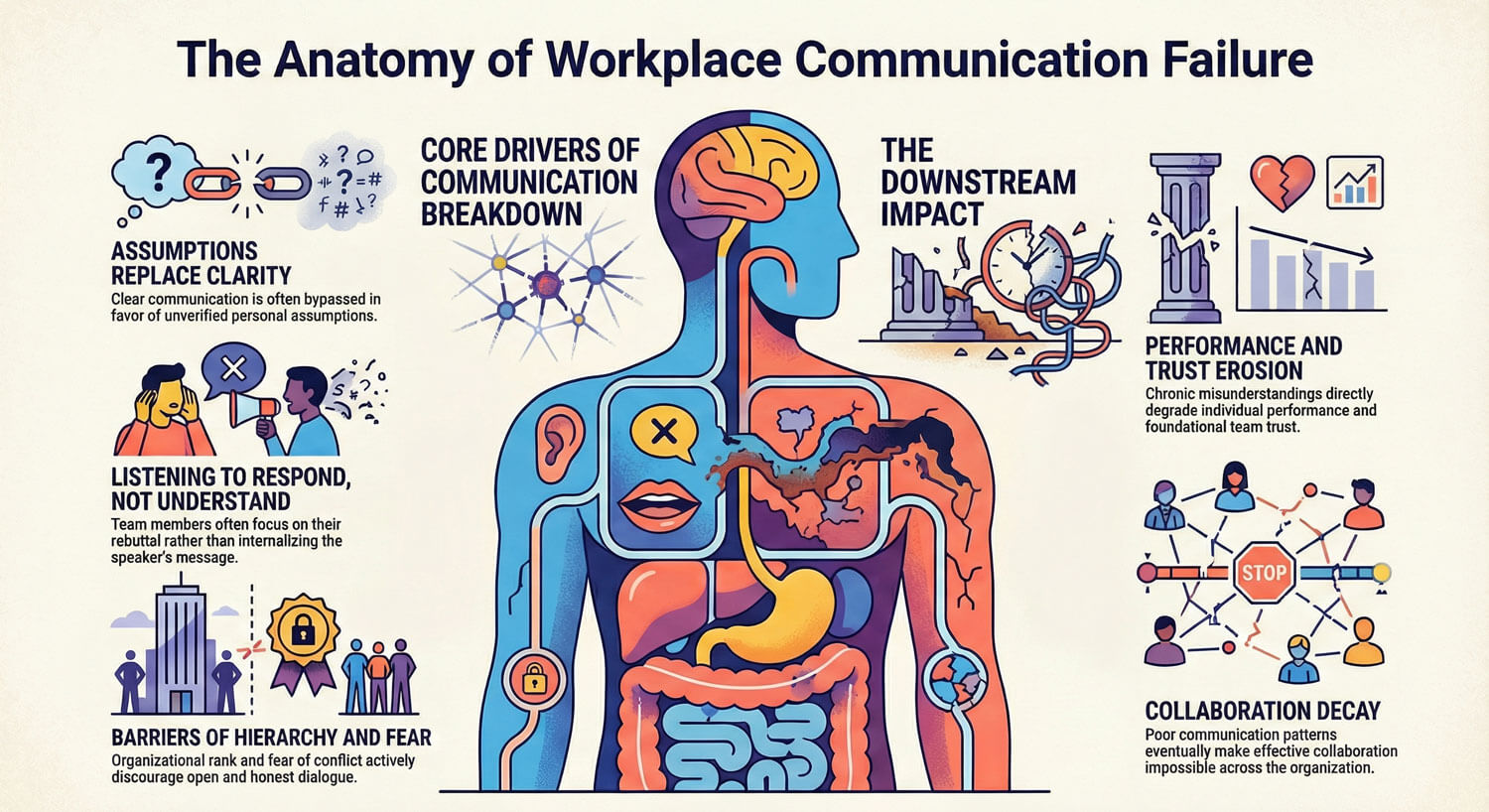
- Assumptions replace clarity
- People listen to respond, not to understand
- Hierarchy discourages open dialogue
- Fear of conflict leads to silence
The Cost of Poor Communication

These costs are rarely visible on reports, but they are deeply felt in daily operations.
Clear communication is not a “nice-to-have”, it is a performance requirement.
Anatomy of Workplace Communication Failure
Building Strong Communication Through Behaviour Change
RWCT’s Perspective on Workplace Communication
At RWCT, we see communication as a core soft skill that directly impacts organisational performance. Our programmes focus on developing communication behaviours that support clarity, trust, and collaboration.
Because when people truly understand one another, work becomes smoother and results follow.