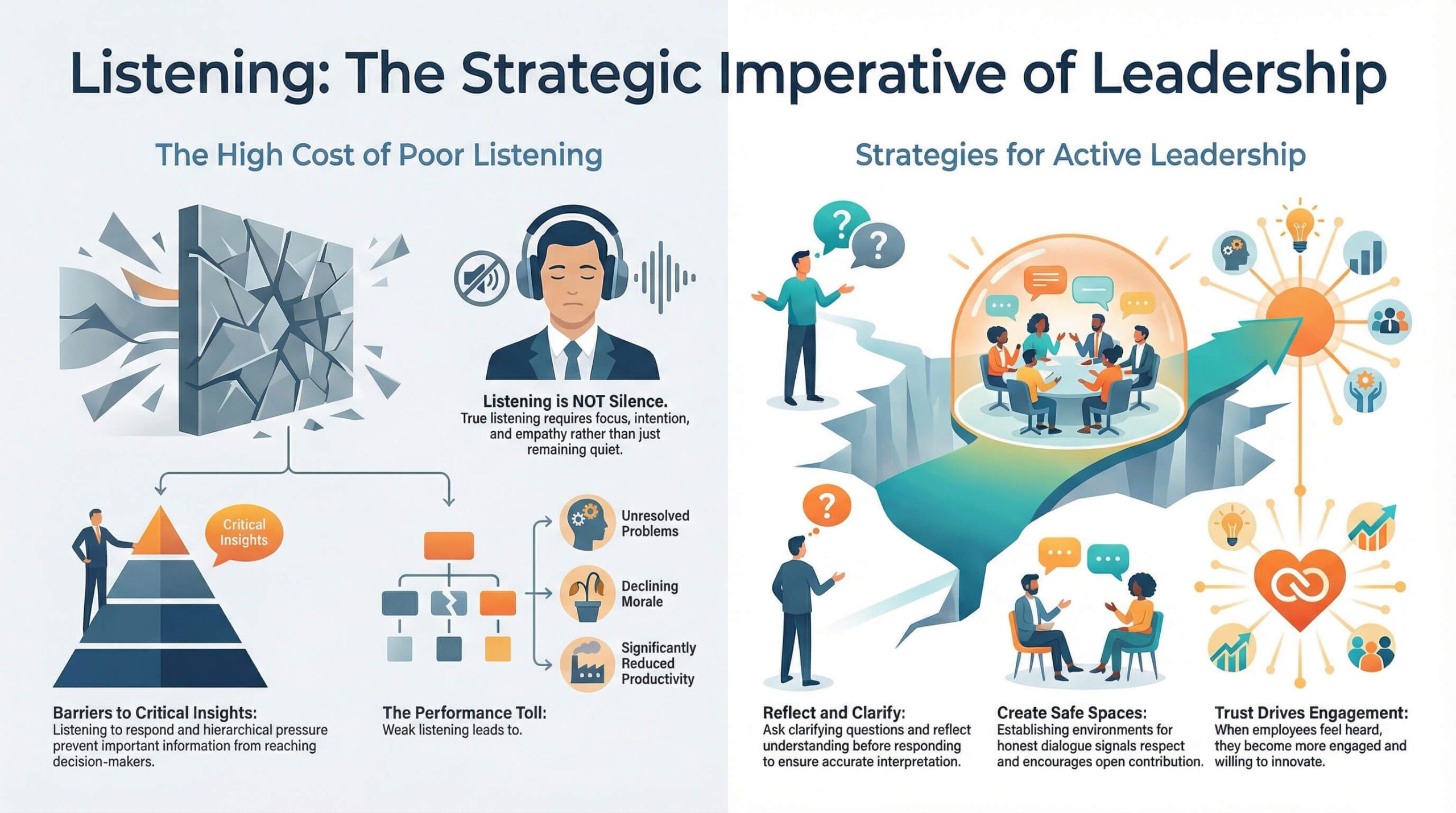
Listening Is Often Mistaken for Silence
Many people believe they are good listeners simply because they remain silent while others speak. In reality, listening is an active skill that requires focus, intention, and empathy.
In leadership, listening is not a passive act it is a strategic skill.
Leaders who listen effectively understand their people better, make informed decisions, and build stronger relationships.
Why Listening Matters in the Workplace
Listening affects how:
When people feel heard, they are more engaged and willing to contribute openly.
Common Barriers to Effective Listening
Listening breaks down when:
- Leaders listen to respond, not to understand
- Assumptions replace curiosity
- Time pressure discourages conversation
- Hierarchy limits honest feedback
These barriers often prevent important insights from reaching decision-makers.
The Impact of Poor Listening on Performance
When listening is weak:
Misunderstandings increase
Problems remain unresolved
Over time, teams become cautious and disengaged, reducing collaboration and innovation.
Developing Strong Listening Skills
Effective listening can be developed through:
Leaders who practise these behaviours signal respect and openness.
RWCT’s Approach to Communication Development
At RWCT, we emphasise listening as a core leadership and communication skill. Our programmes help leaders and teams build listening behaviours that strengthen trust, alignment, and performance.
Because communication improves when listening comes first.