

Soft Skills Are Often Overlooked Until Problems Appear
In many organisations, soft skills are treated as secondary to technical expertise. They are sometimes viewed as “nice to have” rather than essential.
However, when workplace challenges arise miscommunication, conflict, disengagement it becomes clear that soft skills are not optional.
In reality, soft skills are among the hardest and most valuable skills to master.
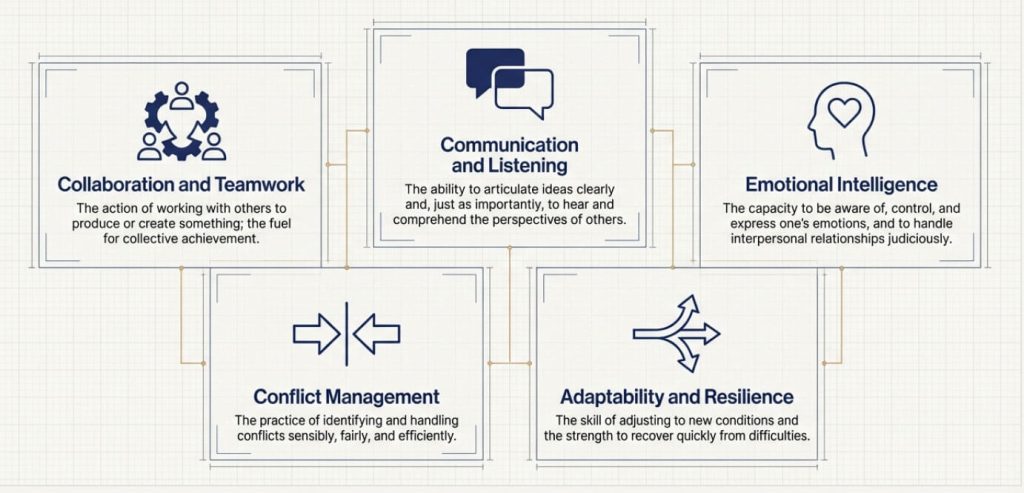
What Are Soft Skills, Really?
- Collaboration and teamwork
- Communication and listening
- Emotional intelligence
- Conflict management
- Adaptability and resilience
Why Soft Skills Are Difficult to Develop
- Assumptions replace clarity
- Involve changing long-standing habits
- Are influenced by emotions and stress
- Must be applied consistently in real situations
The Impact of Strong Soft Skills on Performance
- Communication becomes clearer and more respectful
- Teams collaborate more effectively
- Conflicts are managed constructively
- Trust and engagement increase
These outcomes directly influence productivity, morale, and organisational culture. Soft skills are not “soft” in impact they are foundational to performance.
Soft Skills Development Is a Leadership Responsibility
- Modelling effective communication
- Encouraging feedback and openness
- Creating psychologically safe environments
- Reinforcing positive behaviours
RWCT’s Approach to Soft Skills Development
At RWCT, we approach soft skills development through practical, people-centred learning. Our programmes focus on real workplace scenarios, helping participants apply soft skills in ways that drive collaboration and performance.
Because strong soft skills enable talent to perform not just individually, but collectively.