
Training Is Often Treated as a Support Function
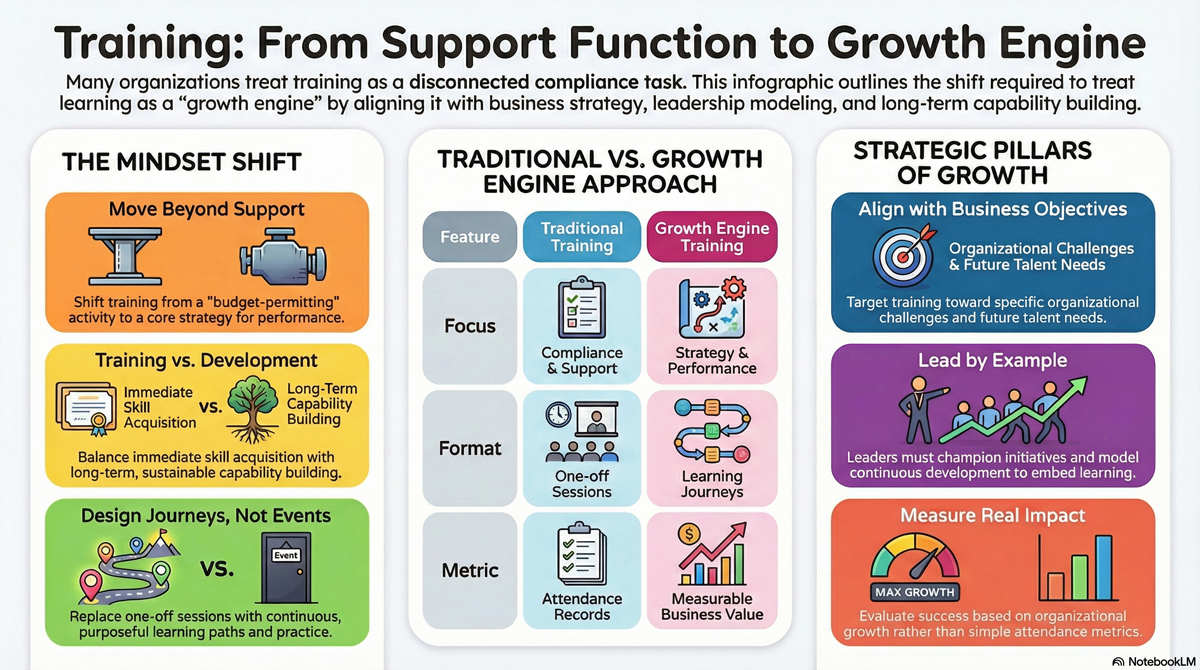
In many organisations, training is seen as a support activity something that happens when time and budget allow. While this approach may check compliance boxes, it rarely drives meaningful growth.
When training is disconnected from strategy, its impact is limited.
Training should instead be viewed as a growth engine that strengthens people, performance, and culture.
How Training Drives Organisational Growth
Training supports growth by:
- Developing leadership capability
- Building critical skills and behaviours
- Aligning teams with organisational goals
- Preparing talent for future challenges
When learning is continuous and purposeful, organisations become more adaptive and resilient.
The Difference Between Training and Development
Training focuses on immediate skill acquisition. Development focuses on long-term capability building. Organisations that use training as a growth engine:
- Design learning journeys, not one-off sessions
- Reinforce learning through leadership and practice
- Measure impact beyond attendance
This shift ensures learning contributes directly to organisational success.
Leadership’s Role in Turning Training into Growth
Leaders play a key role in transforming training into a growth driver. When leaders:

Champion learning initiatives
Model continuous development
Encourage application of new skills
training becomes embedded in how work is done.
Aligning Training With Business Strategy
For training to function as a growth engine, it must align with:
- Business objectives
- Organisational challenges
- Future capability needs
RWCT’s Perspective on Training and Growth
At RWCT, we design training programmes as part of a broader growth strategy. Our approach ensures learning supports leadership, talent development, and organisational performance.
Because growth accelerates when learning is intentional.