
In today’s highly competitive business environment, products and pricing alone are no longer enough to differentiate a company from its competitors. Customers now expect fast responses, personalised interactions, effective problem-solving, and consistent service experiences across every touchpoint.
For many organisations in Malaysia, customer experience has become one of the most important factors influencing customer retention, brand reputation, and long-term profitability.
As a result, more organisations are investing in customer service training in Malaysia to equip employees with the skills needed to meet rising customer expectations and deliver exceptional service experiences.
However, not all training programmes produce lasting results. The most effective programmes focus on changing behaviours, improving communication, and creating measurable business outcomes rather than simply teaching service theories.
Table of Contents
Why Customer Service Matters More Than Ever
Customer Expectations Continue to Rise
Modern customers expect organisations to respond quickly, communicate clearly, and resolve issues efficiently.
Whether interactions happen through phone calls, emails, social media, or face-to-face meetings, customers expect a seamless experience every time.
A single poor customer interaction can lead to:
- Negative online reviews
- Lost repeat business
- Lower customer trust
- Damage to brand reputation
In many industries, customer experience has become one of the biggest competitive advantages.
Customer Experience Drives Business Growth
Excellent customer service creates value beyond solving problems.
Organisations that consistently deliver positive customer experiences often benefit from:
- Higher customer retention
- Increased referrals
Stronger brand loyalty - Better customer relationships
- Higher lifetime customer value
For many businesses, retaining existing customers is significantly more cost-effective than acquiring new ones.
5 Skills Every Customer Service Team Needs
1. Communication Skills
Clear and professional communication is the foundation of excellent customer service.
Employees should be able to explain information clearly, manage expectations, and adapt their communication style to different customer personalities and situations.
Strong communication skills help reduce misunderstandings and improve customer confidence.
2. Active Listening
Customers want to feel heard and understood.
Active listening allows employees to:
- Understand issues accurately
- Identify customer concerns faster
- Build trust during conversations
- Improve resolution quality
Often, customers become less frustrated once they feel that someone genuinely understands their problem.
3. Handling Difficult Customers
Every organisation encounters frustrated or emotional customers from time to time.
Without proper training, employees may become defensive or overwhelmed during difficult conversations.
Customer service training helps employees learn how to:
- Stay calm under pressure
- De-escalate situations professionally
- Respond with empathy
- Protect customer relationships
These skills are essential for maintaining professionalism during challenging interactions.
4. Problem Solving
Customers contact organisations because they want solutions, not excuses.
Employees should be equipped to:
- Identify the root cause of problems
- Evaluate available solutions
- Make informed decisions
- Follow through until resolution
The ability to solve problems efficiently often determines whether customers remain loyal.
5. Service Recovery
Mistakes happen in every organisation.
What matters most is how the organisation responds when problems occur.
Effective service recovery involves:
- Acknowledging the issue
- Taking ownership
- Offering practical solutions
- Following up after resolution
A well-managed recovery process can often strengthen customer trust and loyalty.
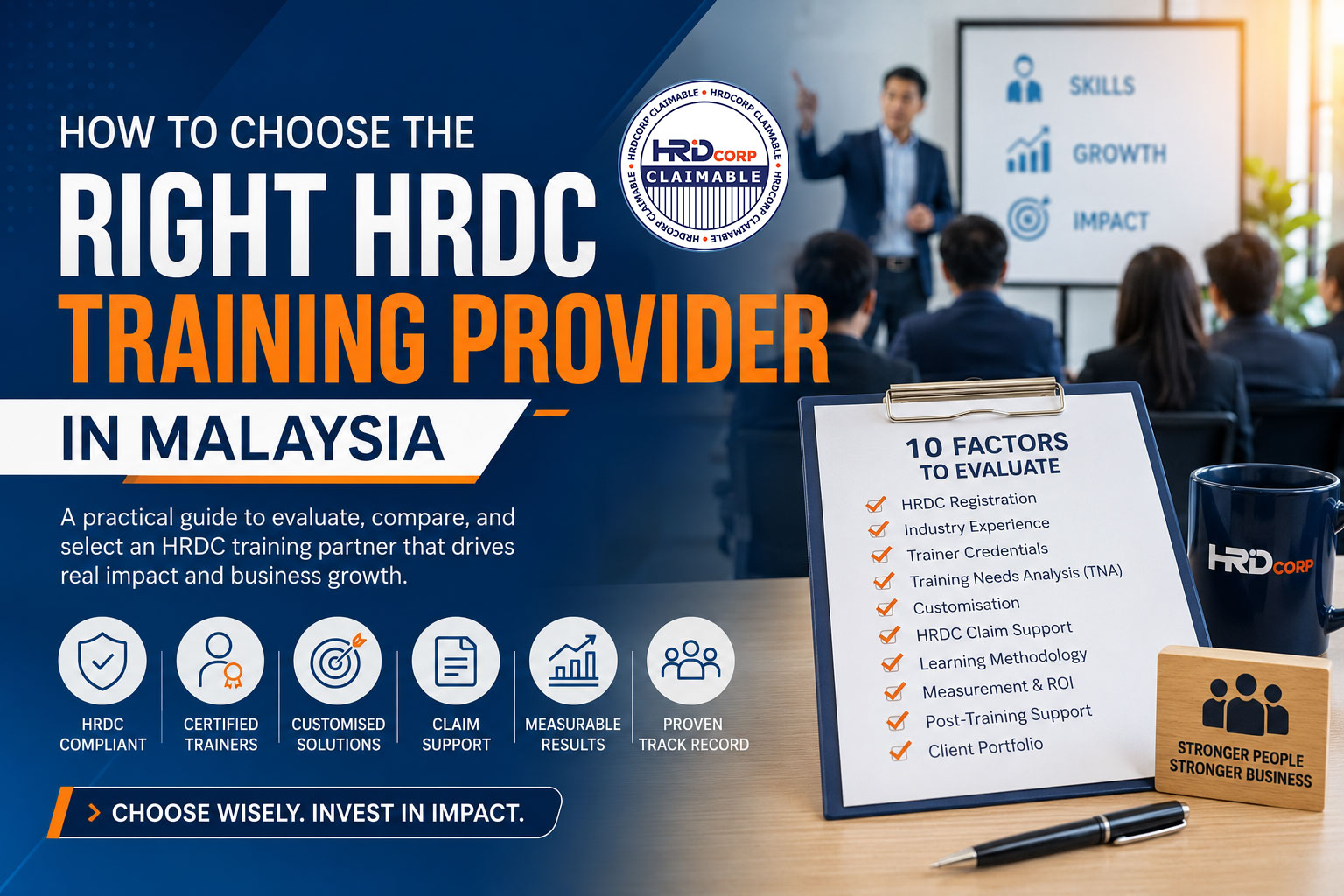
How to Choose the Right Customer Service Training Provider
- Does the programme include practical role plays?
- Can the content be customised to your industry?
- Does the provider understand your business challenges?
- Is there post-training reinforcement or coaching
- Are HRDC claimable options available?
Conclusion
Customer service has evolved from a support function into a strategic business advantage.
Organisations that invest in developing communication skills, problem-solving abilities, and customer engagement capabilities are often better positioned to improve customer loyalty and business performance.
The most effective customer service training programmes are practical, relevant, and aligned with real business objectives.
As customer expectations continue to rise, organisations that prioritise service excellence will be better prepared to remain competitive in the years ahead.